
Ley 233-2026: Puerto Rico’s new law against voceteo
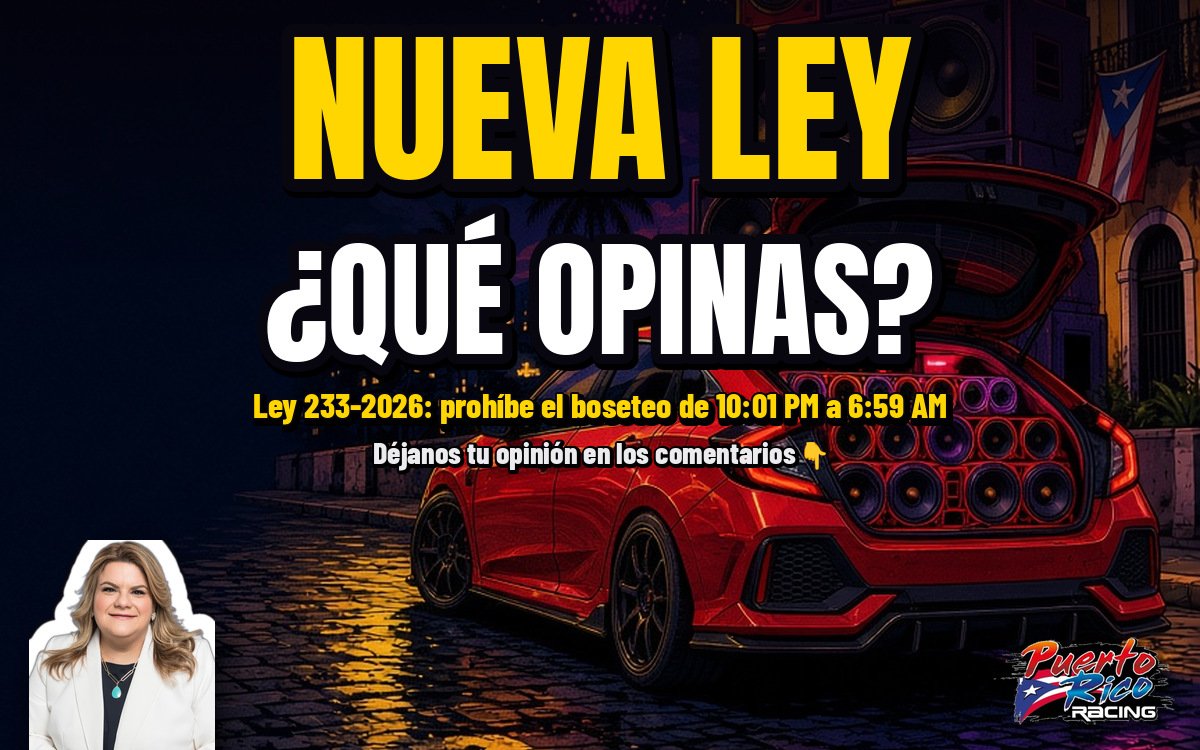
Governor Jenniffer González Colón signed Ley 233-2026, Puerto Rico’s new law against voceteo. The statute comes from House Bill 911, authored by Rep. José “Pichy” Torres Zamora, and amends Ley 22-2000, the Vehicles and Traffic law. As reported by El Nuevo Día and Metro, the measure bans voceteo island-wide from 10:01 p.m. to 6:59 a.m., except for activities the law itself authorizes.
What Ley 233-2026 prohibits, and when it applies
At night, the ban covers all of Puerto Rico: from 10:01 p.m. to 6:59 a.m., every day. Anyone who commits voceteo in that window faces a fixed administrative fine of $1,000 per violation.
According to El Vocero, the measure took effect immediately after approval. At the same time, the Department of Transportation and Public Works, in coordination with the Police, has up to 90 days from approval to adopt the regulations needed to enforce it. The law is already in force; the regulations may still spell out how it will be applied in practice.
What counts as voceteo (and what does not)
Under this law, voceteo is not just any noise from a car. It is defined as playing sound through vehicle or motorcycle audio systems that have been altered, modified, or designed to project sound outward.
It includes speakers, amplifiers, bass equipment, and other components that increase the power or outward projection of the sound, as well as unauthorized vehicle audio demonstrations or competitions not approved by a government entity.
The law draws two important limits:
- Mere possession or installation of extra equipment is not voceteo when the system is not playing sound.
- Using unmodified factory systems that have not been altered to increase their outward projection is also not voceteo.
School zones and quiet zones: the ban is 24 hours a day
In school zones and zones of tranquility, the voceteo ban applies 24 hours a day. Among the protected areas listed in news coverage are:
- public and private schools, and postsecondary and university institutions;
- child daycares and elder-care and adult-care centers;
- hospitals and health facilities open to the public, including mental-health treatment, recovery, and rehabilitation centers, and educational or community facilities with a constant presence of minors;
- hotels, guesthouses (hospederías), and paradores;
- houses of worship.
In these zones, the fine is $1,500 per violation when it occurs within a radius of 100 linear meters from the usable access points to the protected facility’s premises. Municipalities may expand those zones by ordinance.
Fines of $1,000 and $1,500: who can issue the ticket
The administrative penalties confirmed by several outlets are fixed amounts:
- $1,000 for each violation of the island-wide nighttime ban.
- $1,500 for each violation in protected zones, when it occurs within those 100 linear meters.
Both the Puerto Rico Police and municipal police can issue the fines. Of the money collected, 30% goes to the municipality where the violation occurred, for enforcement work, and the remaining 70% goes to the state Police.
During the day, each municipality can set its own rules
Between 7:00 a.m. and 10:00 p.m., Ley 233-2026 recognizes the authority of municipal legislatures to regulate voceteo and the emission of unnecessary or high-volume noise, through ordinances or their public-order codes. Daytime rules can differ from one town to another.
Exceptions the law contemplates
The statute carves out certain uses of loudspeakers and sound systems. They include:
- public announcements from official vehicles, or from vehicles contracted by municipalities or by state or federal agencies;
- religious, electoral, or political activities, and social or public-interest activities promoted or authorized by the state or municipal government;
- demonstrations duly coordinated with the Puerto Rico Police or municipal police;
- activities authorized by municipal ordinance, or that have the corresponding permits to take place during banned hours.
Rep. Torres Zamora, the bill’s author, said, according to Metro, that the measure is not meant to criminalize cultural expression or to limit music as art, but to set reasonable time, place, and manner rules to protect communities’ rest and quality of life.
What this means if you go to a car meet or drive with a sound system
For the car community, the change does not erase each event’s rules: it adds to them. Many meet flyers in Puerto Rico already say “no voceteo” or “voceteo moderado.” That remains the organizer’s rule. To see how it appears on event art, read the guide to car meet rules in Puerto Rico, the fiebru glossary, and the guide on how to read a racing event flyer.
The difference now is legal, and it applies on the street, not only in the meet parking lot. If a gathering runs past 10:01 p.m., or if the spot sits near a school, hospital, house of worship, or another protected zone, Ley 233-2026 is the framework to keep in mind, on top of whatever the organizer asks. Before you head out, confirm the time and place on the Puerto Rico Racing events calendar, and if you are getting the car ready, our guide to preparing your car for a car meet can help.
This report is meant to inform readers, based on what island news outlets have already confirmed; it is not a substitute for the official text of the law or for legal advice. If you have a question about a permit, an ordinance, or a nighttime event, confirm with the organizer and, when it is available, with the DTOP and Police regulations. You can ride along with Puerto Rico Racing radio.
What do you think? Leave a comment below!
Comentarios
Sé el primero en comentar.